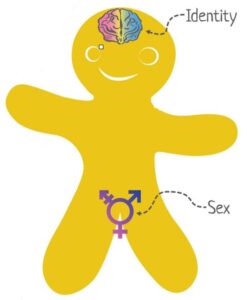
The second aspect of the genderbread person is gender identity. This refers to your inner sense of being male, female, both, or neither.
We distinguish between cisgender and transgender persons.
Cisgender
A cisgender person is a person whose gender identity largely aligns with the sex they were assigned at birth.
Example: Someone assigned female at birth who identifies as a woman.
Transgender
A transgender person is a person whose their gender identity largely does not align with the sex they were assigned at birth.
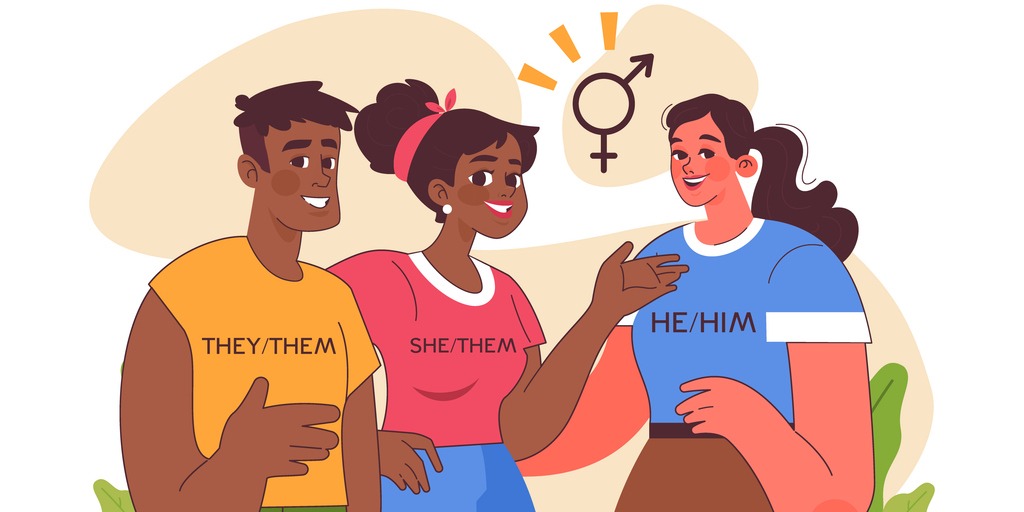
Transgender is an umbrella term. This means that the term can cover a lot of diversity. In short, trans people can feel like a woman (trans woman), a man (trans man) or neither. When people do not feel fully at home under the rubric of male or female, we call them non-binary.
Transition
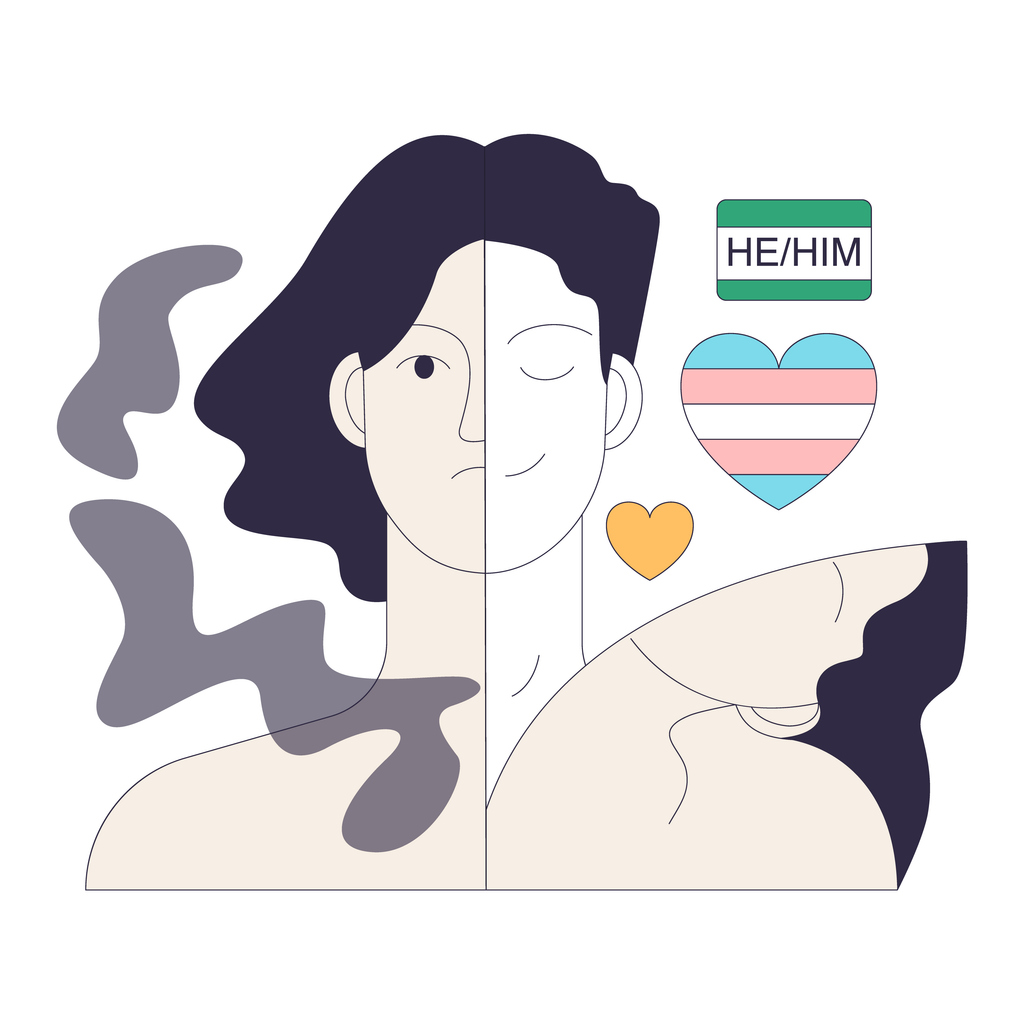
When we talk about trans people, we often think of a medical transition (e.g., hormones, surgeries, etc). However, not every trans person wishes to undergo a (full) medical transition.
There are other ways to transition, including:
You discover and accept who you are (emotional transition).
You can inform others, you start wearing different clothes, you let your hair grow… (social transition).
You can change your name and/or sex marker on your identity card (legal transition).
…
It is up to each person to decide which steps they want to take, if any.For more information, visit the website ofTransgender Infopunt.