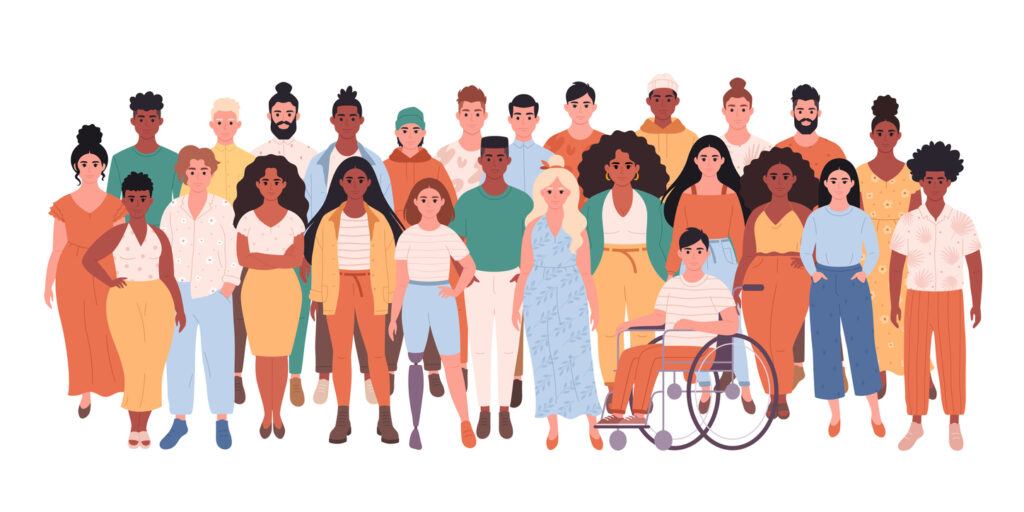
The last concept we want to introduce in this e-learning is intersectionality.
This is because we have talked about gender and sex, among other things, but these are only two characteristics of a person’s identity. In addition, your identity is also determined by other aspects, such as your ethnicity, financial resources, age… These aspects influence each other.
We call this way of looking at our identity ‘intersectionality’.
Intersectionality is the idea that different parts of your identity such as your skin colour, age, sexual orientation… influence each other.
When you want to think about inequalities a person experiences, you shouldn’t just talk about one of those pieces of identity. It’s best to take the different aspects into account.
You may be advantaged in some aspects, while not at all in other aspects.
You can see this in the video, but also in the following examples:
A white gay man might be advantaged on the aspects of sex and skin colour, but not on the aspect of sexual orientation. There might also be a difference in inequality when that man grows up in Belgium or in Russia, for example.
A lesbian Muslim woman may be disadvantaged on the aspects of sex, religion and sexual orientation.
A black trans person may be disadvantaged on the aspects of gender identity, gender expression and skin colour. If the person is a trans man with male expression, they may be advantaged because of their male gender identity.
In the following topics, you will learn more about the intersection LGBTI+ and migration and the expectations and obstacles within a procedure for international protection based on SOGI (Sexual Orientation and Gender Identity).